


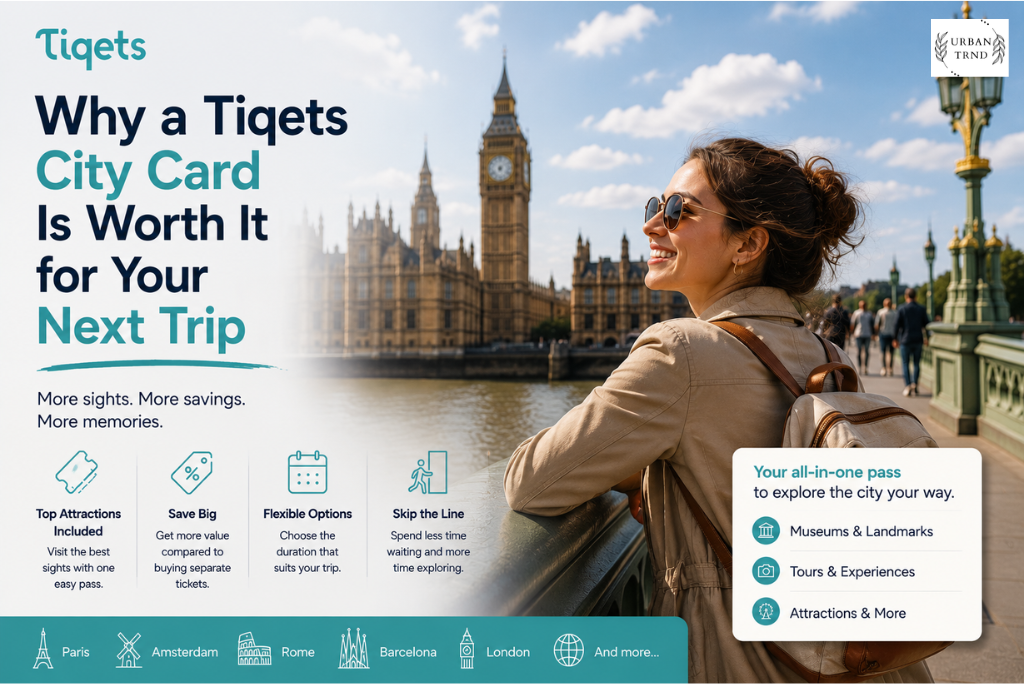
There’s a specific kind of traveler who lands in a new city with a list of ten must-see attractions and roughly three days to fit them all in. If that sounds like you, individually booking every single sight starts to feel like its own part-time job, comparing prices, checking opening hours, figuring out which ones need timed entry. This is exactly the situation Tiqets city cards were built to solve, and once you understand how they actually work, it’s easy to see why they’ve become such a popular pick for anyone trying to see a lot without the usual planning headache.
One Purchase, a Whole Cluster of Major Sights
The basic idea behind a city card is refreshingly simple. Instead of booking each attraction separately, working out pricing and availability one listing at a time, you buy a single pass that grants access to a curated bundle of a destination’s best-known sights. That might mean museums, landmarks, and observation decks all rolled into the same purchase, letting you move through a city’s highlights without needing to individually research and book each stop along the way.
For a city like New York, where the list of must-see attractions can feel genuinely overwhelming, this kind of bundled access turns a complicated planning exercise into a much simpler one. You commit to the card, and from there it’s really just a matter of deciding which attractions to fit into your schedule and when.
Built for Travelers Who Want to Move Efficiently


City cards work best for exactly the kind of trip where efficiency actually matters, a short visit packed with ambition, or a longer stay where you want to knock out the major sights early so you can spend the rest of your time exploring more spontaneously. Rather than treating each attraction as its own separate transaction and its own separate planning decision, the card consolidates all of that into one single commitment made upfront.
This matters more than it might seem at first. Every attraction you book individually adds a small amount of decision fatigue, comparing prices, checking reviews, figuring out timing. Multiply that by ten different sights and it becomes a genuinely tiring part of trip planning. A city card removes almost all of that friction in one go, letting you focus your planning energy on your actual schedule rather than the logistics of getting into each place.
Real Savings Compared to Booking Everything Separately
Beyond the convenience, there’s a genuine financial upside to bundling access this way. Combining a cluster of major attractions into a single card typically works out considerably cheaper than paying full individual admission for each one separately, especially once you factor in how many of the big-name sights in any major city tend to carry premium standalone pricing. For a family or group trying to see the highlights of a destination without blowing through their travel budget in the first two days, this kind of bundled saving can make a real difference.
That value becomes even more obvious the more attractions you actually plan to visit. A traveler who’s only interested in one or two sights probably won’t see much benefit from a card built around broader access, but for anyone trying to genuinely experience a city’s top attractions during a single trip, the math tends to work out strongly in the card’s favour.
Flexibility to Fit Your Own Pace
A common misconception about bundled passes is that they force you into a rigid schedule, but that’s not really how these work. Once you have the card, you’re free to visit the included attractions in whatever order and at whatever pace actually suits your trip, rather than being locked into a fixed itinerary designed by someone else. That flexibility means the card supports the way you actually want to travel rather than dictating it.
For travelers who like a bit of spontaneity mixed in with their planning, this is exactly the right balance, the big attractions are already sorted and paid for, but the day-to-day experience of moving between them still feels like your own trip rather than a scripted tour.
A Smart Starting Point for First-Time Visitors


If you’re visiting a major destination for the first time and genuinely don’t know where to start, a city card is one of the easiest ways to make sure you’re not missing anything important. Because these cards are built around a destination’s most recognized and most recommended sights, buying one essentially outsources some of that initial research to people who already know which attractions define a first-time visit to that city.
That’s particularly valuable for cities with an overwhelming number of options, where narrowing down a list from scratch can feel paralyzing. Instead of trying to independently research every possible attraction and rank them by priority, the card hands you a solid, well-considered starting point, and you can always add extra individually booked experiences around it if something specific catches your eye that isn’t included.
Combine It With Individual Bookings for the Best of Both
None of this means a city card has to be the only thing you book for a trip. Plenty of travelers use a card to cover the major, unmissable sights and then book a handful of additional experiences separately, a specific tour, a smaller museum, an activity that isn’t part of the standard bundle. This combination approach lets you get the cost savings and simplicity of the card for the big-ticket items while still keeping the flexibility to add anything more specific or personal to your itinerary.
Why It’s Worth Considering Before You Book Anything Else
If your upcoming trip involves a city with a long list of major attractions and only a limited amount of time to see them, it’s worth checking on Tiqets whether a city card is available before you start booking things individually. The combination of bundled savings, simplified planning, and genuine flexibility in how you use it makes this one of the smartest tickets you can buy for exactly the kind of ambitious, sight-seeing-heavy trip so many travelers are hoping to have. Take a look at what’s included for your destination, compare it against what you were planning to see anyway, and there’s a good chance it ends up being the single best value decision of your entire trip.