


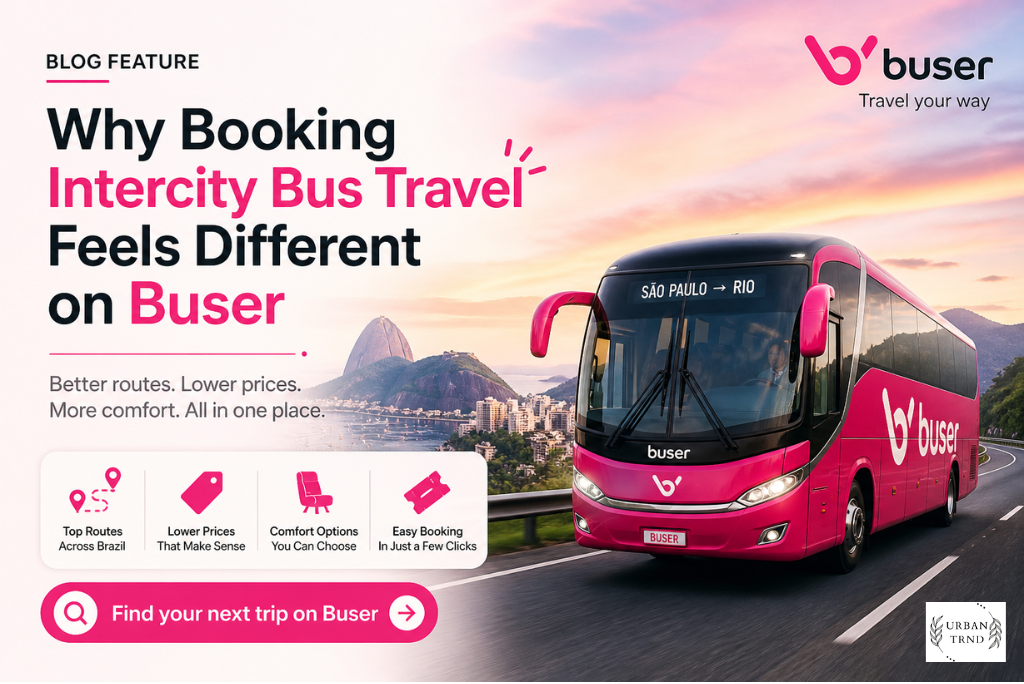
If you’ve ever booked an intercity bus, you probably know the feeling. You open a few tabs, compare prices that don’t make much sense, try to figure out timings that fit your plan, and somewhere in between, you end up settling for something that’s just “okay enough.”
That’s usually how it goes.
But when you try Buser, the experience feels a bit more… sorted. Not in a flashy way, just in a way that makes things easier to decide.
And honestly, that’s what makes people come back.
It starts with routes that actually match how people travel
One of the first things you notice is how straightforward the routes feel. You’re not scrolling through endless irrelevant options or trying to decode confusing stops. You search for a city-to-city trip, and you get exactly that.
Routes between major cities like São Paulo, Rio de Janeiro, Belo Horizonte, Curitiba and others show up with timings that feel usable, not random. Morning, evening, overnight—you’ll usually find something that fits instead of something you have to adjust your whole plan around.
It feels less like browsing and more like choosing.
And that small shift matters more than it sounds.
The pricing is where most people pause


This is usually the moment people take a second look.
You check a route, you see the price, and your first reaction is, “wait, is this right?”
Because more often than not, it’s lower than what you expected.
What makes it work is that it doesn’t feel like a one-time deal or some hidden condition situation. You’ll notice this across multiple routes, not just one lucky search. Over time, you start trusting that what you’re seeing is actually the price you can rely on.
For someone who travels even occasionally, that difference adds up quickly.
And once you get used to paying less for the same journey, it’s hard to ignore.
You actually get to choose how you want to travel
A lot of platforms technically offer options, but they don’t always make those options clear. Here, it feels more visible.
You can see different types of buses, understand the seating, and get a sense of what your journey is going to be like before you book. Some options are more basic, some are more comfortable, and you can pick based on what you need for that trip.
If it’s a short ride, you might not care much. But for longer routes, this becomes important very quickly.
And instead of guessing, you’re choosing.
That’s a better place to be when you’re spending money on travel.
The popular routes just make sense
There’s also something reassuring about how certain routes are consistently available with good timing options. It shows that the platform is aligned with what people are actually booking.
You’re not struggling to find a decent departure time on high-demand routes. Chances are, someone else has already taken that route recently, and the availability reflects that.
Even if you’re not planning too far in advance, you still have options that feel relevant.
That reliability quietly builds trust.
Deals don’t feel forced
You know how some platforms try too hard to make everything look like a “limited-time offer”? This doesn’t feel like that.
Here, the pricing advantage is just… there.
Sometimes you’ll notice that changing your timing slightly gives you a better price. Sometimes booking a bit earlier helps. But it never feels like you’re being pushed into making a rushed decision.
It feels more like you’re figuring out what works best for you, and the platform is simply showing you the options clearly.
That’s a big difference.
The booking process doesn’t get in your way
Once you’ve made your choice, the last thing you want is a complicated checkout flow.
This is where things stay smooth.
You select your trip, confirm your details, and you’re done. No unnecessary steps, no confusion, no moments where you feel like something might go wrong.
It’s simple, and more importantly, it stays out of your way.
And when the booking experience is this clean, it reinforces your decision instead of interrupting it.
It slowly becomes your default


Most people don’t switch platforms instantly. It usually happens over time.
You try something once, maybe because the price looked good or the route was convenient. The experience turns out better than expected. Then the next time you need to book, you check it again.
And before you realise it, it becomes your starting point.
That’s how it tends to work with Buser.
Not because it tries to push you into choosing it, but because it keeps making sense every time you come back.
There’s a certain ease to the whole experience
What stands out in the end isn’t just one feature. It’s how everything comes together.
The routes are clear, the prices feel fair, the options are visible, and the booking process is smooth. Nothing feels overcomplicated or forced.
You don’t feel like you’re taking a risk or second-guessing your choice.
You just book and move on.
And that’s exactly how it should feel.
Worth checking before your next trip
If you already have a trip in mind, it’s genuinely worth taking a few minutes to check what’s available on Buser.
Not as a backup option, but as a real one.
Because once you see the routes, compare the prices, and go through the booking flow, there’s a good chance it’ll just make more sense.
And when something feels easier and better at the same time, the decision doesn’t take long.