


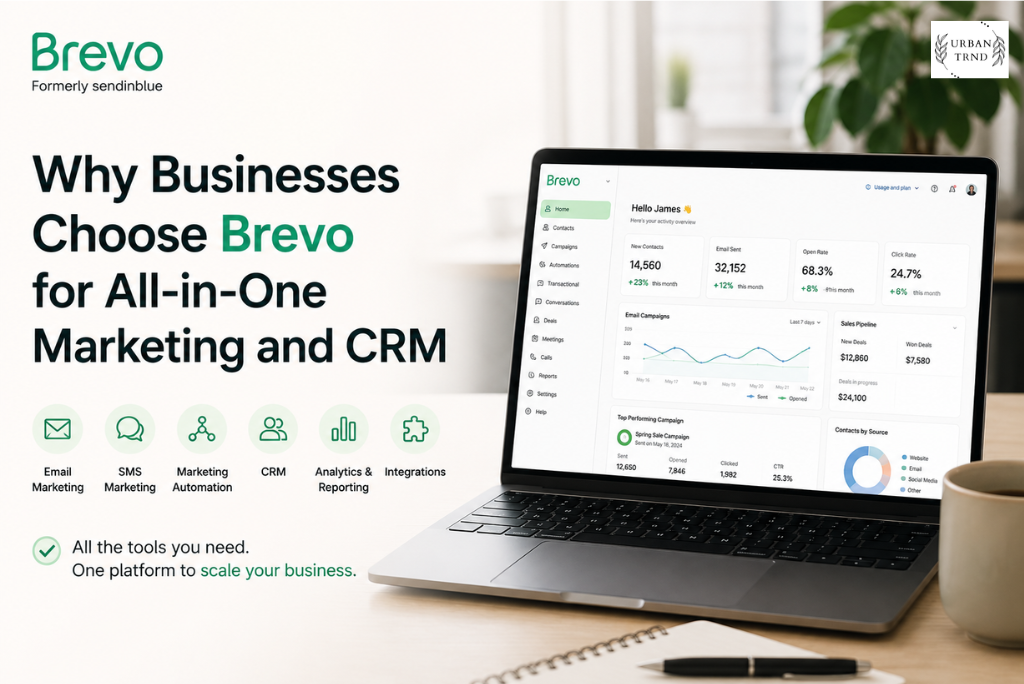
Every growing business eventually hits the same wall, too many separate tools, none of them talking to each other properly, and a marketing team spending half their time just moving data between systems instead of actually running campaigns. Brevo has become the answer for a huge number of businesses trying to escape exactly that situation, and once you understand what people actually use it for most, and what’s backing every plan, it’s easy to see why it keeps winning over teams who’ve tried the scattered-tools approach and are done with it.
Email Marketing Remains the Feature Everyone Starts With
Ask any Brevo customer what they signed up for first and the answer is almost always email marketing, and it’s stayed that way even as the platform has grown into something much bigger. The drag-and-drop campaign builder is genuinely approachable for anyone, no coding background needed, and the template library means you’re never staring at a blank canvas trying to figure out where to begin. What keeps people actually using it long term, rather than abandoning it after the novelty wears off, is the automation sitting underneath, letting campaigns respond to real contact behavior instead of just going out on a fixed schedule regardless of who’s actually engaging.
This is exactly why email remains the most popular starting point for new Brevo customers. It solves an immediate, obvious need, and it does it well enough that people naturally start exploring what else the platform can do once they’ve seen how much better their email results look compared to whatever they were using before.
Marketing Automation Turns One-Time Campaigns Into an Actual System
Once businesses get comfortable with the basic campaign builder, marketing automation tends to be the next thing they lean into heavily, and it’s become one of Brevo’s most consistently used features for good reason. Building out automated journeys, welcome sequences, abandoned cart follow-ups, re-engagement flows for quiet contacts, turns email from something you have to remember to do manually into something that just runs in the background, doing the work while your team focuses on strategy instead of hitting send every single day.
This is particularly popular among ecommerce businesses specifically, where an abandoned cart sequence alone can meaningfully recover revenue that would otherwise just be lost. Having that kind of automation available without needing a developer to build it from scratch is a big part of why this feature gets so much genuine, daily use rather than sitting unused after initial setup.
SMS and WhatsApp Have Become Fast-Growing Favorites


While email remains the anchor, SMS and WhatsApp campaigns have grown into genuinely popular additions for businesses that want higher visibility for time-sensitive messages. A well-timed SMS for a flash sale or an order update tends to get seen almost immediately in a way email sometimes doesn’t, and WhatsApp campaigns bring a level of familiarity and immediacy that a lot of customers respond to more naturally than a traditional marketing email. Businesses that add these channels on top of their existing email strategy consistently report noticeably better overall engagement, which is exactly why this combination has become such a common upgrade path for growing Brevo accounts.
The Free Plan Makes Trying Brevo Genuinely Risk-Free
One of the biggest reasons so many businesses end up trying Brevo in the first place is how accessible it is to start. Signing up doesn’t require a credit card, and there’s a genuinely usable free tier that lets you actually test the platform with real campaigns before committing to anything paid. That matters enormously for smaller businesses and solo entrepreneurs who don’t want to gamble a chunk of their budget on a tool they haven’t properly tried yet.
This approach removes the usual hesitation that comes with switching marketing platforms. Instead of reading reviews and hoping for the best, you can actually build a real campaign, send it to real contacts, and see genuine results before deciding whether to upgrade into a paid plan that unlocks higher sending volumes and more advanced automation.
Plans That Scale With However Big You Actually Are
Beyond the free tier, Brevo structures its plans around how a business actually grows, rather than forcing everyone into the same rigid package regardless of size. Small businesses and entrepreneurs get straightforward, simple tools that don’t require a steep learning curve, while mid-market and enterprise customers get access to more advanced customization, tailored onboarding, and stronger data control and security suited to larger, more complex operations. That range means you’re not stuck outgrowing the platform the moment your business actually starts scaling, you simply move into a plan tier that matches where you actually are.
Trusted by Genuinely Recognizable Brands
It’s worth noting that Brevo isn’t just a tool for small businesses experimenting with their first email campaign. Recognizable global names have used the platform for their own customer engagement needs, which reflects a level of trust that goes well beyond marketing claims. When larger, more established businesses are willing to run their customer communications through a platform, it says a lot about how genuinely capable that platform is under real, high-volume, high-stakes conditions, not just in a simple demo environment.
Recognition From Independent Review Platforms
Brevo has also picked up consistent recognition from major independent software review platforms, being named a leader across multiple categories including email marketing and template building, both for smaller businesses and larger mid-market customers. That kind of repeated, independent recognition matters a lot more than a company’s own marketing claims, since it reflects genuine, verified customer satisfaction rather than curated testimonials chosen to make the platform look good.
Real Businesses, Real Growth Stories
Beyond the awards, what really backs up why Brevo is worth choosing comes from the actual results businesses report after switching. Marketing agencies have used the platform to meaningfully grow client revenue through better automation and segmentation. Restaurant chains have digitized entire loyalty programs through Brevo and seen genuinely strong repeat visit rates as a result. Travel businesses have used personalized, well-segmented campaigns to drive real revenue growth and better engagement across their customer base. These aren’t hypothetical use cases, they’re the kind of outcomes that happen when a platform actually does what it promises rather than just looking good on a features page.
Live Chat and Chatbot Round Out the Most-Used Feature List
Beyond the campaign side, live chat and chatbot functionality have quietly become some of the most consistently used tools among Brevo customers running an active website or online store. Being able to catch a visitor’s question in real time, right at the exact moment they’re deciding whether to complete a purchase, tends to have an outsized impact on conversion compared to hoping they’ll email in with a question later. The chatbot layer picks up the repetitive, predictable questions automatically, which means even businesses without a large dedicated support team can offer immediate responses around the clock, while genuinely complex questions still get routed to a real person through the same live chat interface.
This combination has become especially popular among ecommerce businesses and service providers who can’t staff a support team every hour of the day but still want visitors to feel like someone’s actually there when a question comes up.
Templates and the Aura AI Assistant Make Getting Started Painless


A big reason so many new customers stick with Brevo well past their first campaign is how little friction there is in actually getting something professional out the door. The template library removes the intimidation of starting from a blank page, and the Aura AI marketing agent takes that even further, helping generate campaign copy, automatically segment your audience, and even suggest the best times to send based on how your specific contacts actually behave. For a small business without a dedicated marketing writer or data analyst on staff, having that kind of support built directly into the platform is genuinely transformative, turning what used to require specialist skills into something anyone on the team can handle confidently.
A Platform That Grows Alongside Your Actual Needs
What ultimately separates Brevo from a lot of competing tools is that it doesn’t force a business to pick a lane early and get stuck there. A solo entrepreneur starting with a simple welcome email sequence can, months or years later, be running a full multichannel strategy across email, SMS, and WhatsApp, backed by a proper sales pipeline and a loyalty program, all without ever needing to migrate to a different platform. That continuity matters enormously, since switching marketing tools partway through a business’s growth is disruptive, costly, and something most teams actively want to avoid if there’s any reasonable alternative.
Why All of This Adds Up to the Smarter Choice
Put together, an approachable email and automation foundation that keeps businesses engaged long after signup, fast-growing SMS and WhatsApp channels that boost engagement further, a genuinely risk-free way to try the platform before paying anything, plans that scale honestly with business size, trust from recognizable global brands, and consistent independent recognition, it’s easy to see why Brevo has become the default choice for so many businesses trying to consolidate their marketing and sales tools into one place. It’s not about one single flashy feature, it’s about a consistently strong experience across every part of customer engagement.
If you’re currently juggling separate tools for email, SMS, live chat, and your CRM, and dreading how disconnected they all feel, it’s worth giving Brevo a proper look. Between the genuinely free starting point, the range of channels available, and the AI tools helping cut down on repetitive work, there’s a strong case for making Brevo the one platform you actually stick with rather than yet another tool you eventually abandon for something else.