


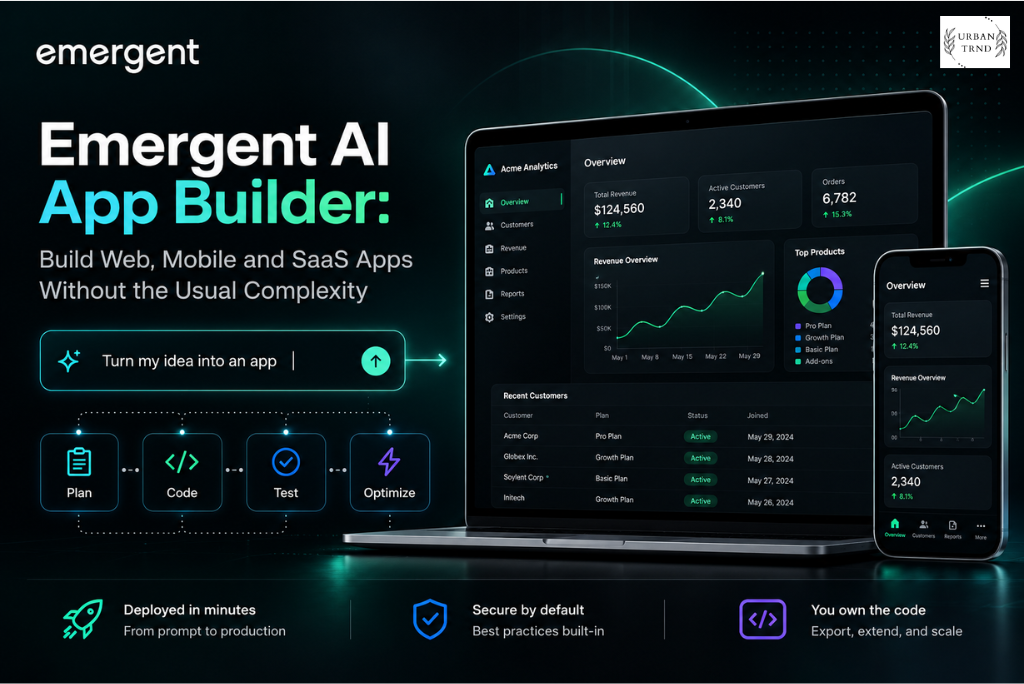
Turning an idea into a working app can feel much harder than coming up with the idea itself. You may know exactly what you want the product to do, how the screens should look, and who should use it, yet the technical work between that idea and a finished application can become a major project. Emergent takes a different approach. Instead of starting by writing code, you can describe what you want in plain language and let its AI build the application around your requirements.
Start With the App You Actually Want
The strongest part of Emergent is the starting point. You do not have to begin by choosing from a rigid template and then work around its limitations. Instead, you describe the product you have in mind, including the pages, features, workflows and experience you want users to have.
Emergent can turn that description into a working application, making the process feel closer to explaining an idea to a development team than learning a complicated software tool. Its platform is designed to generate the interface, components and logic from natural-language prompts, which makes it especially appealing when you already know the outcome you want but would rather not build every technical piece manually.
Build Web Apps Around Real Requirements
For businesses and creators, a web app can mean very different things. It could be a customer portal, a booking system, an internal dashboard, a marketplace, a productivity tool or a complete SaaS product. Emergent supports this range rather than restricting you to one type of application.
The AI web app builder can generate full pages with forms, tables, filters and charts, while also connecting the application to data. That means a project can move beyond a static page and become something people can actually interact with. You can continue refining the product through prompts, adding workflows and changing features as the idea develops.
Create Mobile Experiences Too
If your audience needs an app they can use on a phone, Emergent also supports mobile application development. The platform brings together interface design, data, logic and integrations, allowing you to describe the screens and user flows you want rather than manually assembling every part.
The mobile app builder supports structured interfaces that adapt across devices, while prompts can be used to adjust layouts, components and functionality.
Turn Spreadsheets Into Useful Products


A surprising number of business processes start in spreadsheets. Teams track customers, projects, inventory, leads, expenses or operations in rows and columns because it works, at least initially. The problem comes when that information needs a better interface or when several people need to interact with it.
Emergent can connect spreadsheets or datasets and turn existing information into interactive dashboards. This turns existing information into something people can actually use. That makes it especially useful for teams that already have information but want a cleaner, more interactive way to work with it.
Build Ecommerce Experiences
For businesses selling products online, Emergent also has an ecommerce app builder. The important advantage is flexibility. An ecommerce application can be shaped around the brand, products, customers and purchasing journey instead of forcing the business into a fixed structure.
You can describe the store experience you want and build the pages, data structures and functionality around it.
Create SaaS Products From an Idea
Emergent is also suited to SaaS projects, where the application itself becomes the product. Its SaaS builder supports the creation of interfaces, databases, backend functionality and interactive features, allowing founders to focus on what the software should actually help users accomplish.
A SaaS idea can begin with something simple and grow as requirements become clearer. Emergent supports ongoing changes, so you can add workflows, integrations, user roles and other functionality as the product develops. That ability to keep refining the application through prompts makes the platform useful beyond the first build.
Build Dashboards That People Can Use
Dashboards are another natural use case. Instead of presenting information in a static document, Emergent can turn datasets into interactive experiences with tables, charts, filters and other interface elements.
This can be valuable for sales teams, operations, finance departments, marketing teams or anyone who needs a clearer way to work with information. You can describe what the dashboard should show and how users should interact with it, then continue refining the result as the reporting requirements change.
Add Data and Backend Functionality
A polished interface is only part of an application. The information behind it needs to be stored, connected and managed properly. Emergent handles data and backend creation as part of the application-building process, including data models and relationships.
This means you can describe what information the application needs to store and how different parts should connect, rather than having to build the entire data layer separately.
Connect APIs, Payments and Other Tools
Modern applications rarely work in isolation. They often need payment gateways, APIs, CRMs, external services or other business tools. Emergent supports integrations through prompts, allowing you to describe the systems you want to connect and the functionality you need.
The platform also supports authentication flows, including email, OTP and social logins, as well as user roles and permissions. These features are particularly useful when an application needs different experiences for customers, staff, administrators or other user groups.
Make the Product Look Like Your Brand
Design matters, especially when an application represents a business. Emergent lets you describe the visual direction you want and generates layouts and components around your brand. You can then refine the design through prompts instead of starting over.
This is useful for founders who have a clear idea of their visual identity but do not want to spend their time learning design software. The platform can create complete pages with forms, tables, filters and charts while keeping the overall experience consistent with the brand you describe.
Build Internal Business Applications
Not every useful app needs to be sold to customers. Businesses can use Emergent to create internal tools for managing operations, projects, data, approvals and workflows.
That flexibility is one of the reasons the platform can work for both individuals and teams. A company might create a customer-facing application, while another project could focus entirely on improving an internal process. The same conversational approach can be used for both.
Explore White-Label App Building
Agencies and businesses serving multiple clients can also explore Emergent’s white-label app capabilities. The platform supports brand customization, client workspaces, reseller pricing and reusable app templates.
This can be particularly useful when a service provider wants to create client-specific applications without rebuilding every project from scratch.
Choose a Plan That Matches Your Build
Emergent offers a free plan for getting started, with paid options designed for people who need more building capacity and advanced capabilities. The Standard plan adds private project hosting, more credits and GitHub integration, while Pro adds features such as custom AI agents, high-performance computing and a larger context window. Business and Enterprise options extend the platform with team collaboration, access controls, audit features, deployment options and administrative capabilities.
Why Emergent Is Worth Trying


Emergent is most compelling when you have a clear product idea but do not want the traditional gap between an idea and a development team to slow you down. You can explain what you want, see the application take shape, refine it through conversation and continue adding functionality as your needs change.
The platform covers a surprisingly broad range of projects, from websites and mobile apps to dashboards, ecommerce products, SaaS tools and internal applications. It also brings design, data, backend functionality, authentication, integrations and deployment into the same overall workflow.
For founders, creators and businesses, that combination can make building feel much more approachable. You are not simply buying access to a collection of templates. You are getting a conversational way to turn an idea into working software.
Start Building Your Idea
If you have been sitting on an app idea because the technical side seemed like too much work, Emergent gives you a practical reason to start. Describe the product, explain the experience you want, connect the information and services it needs, and then keep improving it as the application takes shape.
You can begin with a web app, explore mobile development, turn existing data into a dashboard, build an ecommerce experience or develop a SaaS product around a specific problem. The flexibility is the real attraction.
Emergent brings the building process closer to the way people naturally think about products: explain the idea, see it become real, make changes and keep moving. If that sounds like the kind of development experience you have been looking for, starting with Emergent is an easy way to see what your next idea could become.