


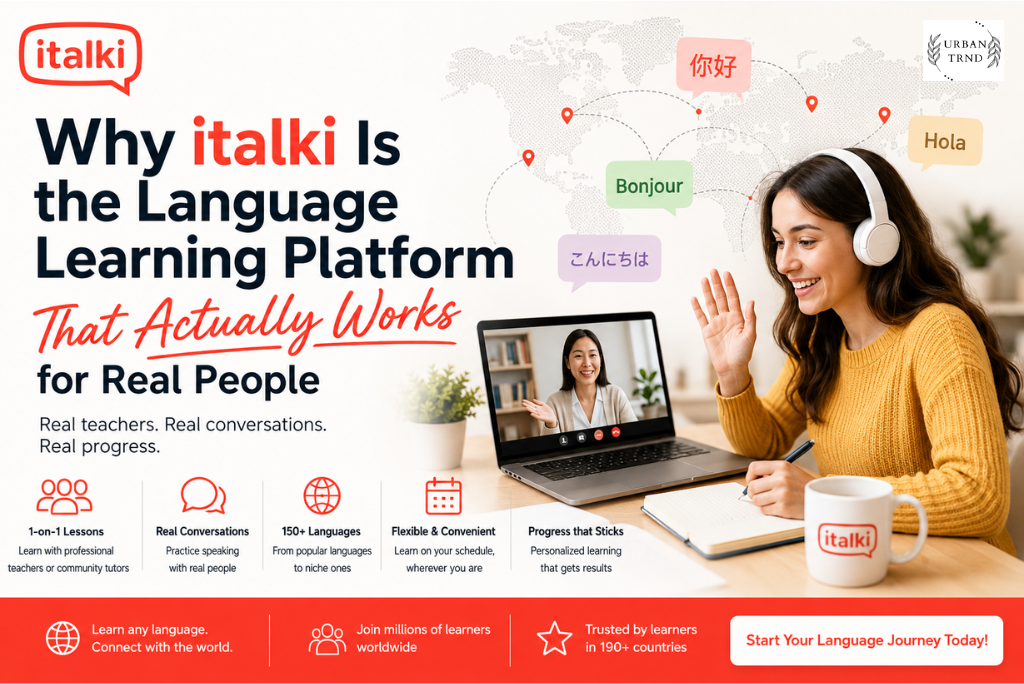
Most language learning platforms want you to follow their plan. You download the app, you get assigned a path, you do the exercises in the order someone else decided, and somewhere around week three you’re grinding through grammatically correct sentences you’d never actually say to another human being. The progress is measurable in points but the ability to hold a conversation stays frustratingly out of reach.
italki is built around a completely different philosophy. Instead of a curriculum, you get access to a marketplace of real teachers from all over the world, and instead of a schedule, you book when it works for you. The result is a language learning experience that reflects how people actually get good at languages — through real conversation, with real speakers, in a format that fits real life.
Here’s a thorough look at what italki offers, what tends to work best for different kinds of learners, and why it’s worth putting your budget here rather than into another subscription app.
The Two Types of Teachers — and Why the Distinction Matters
The teacher marketplace on italki splits into two clearly defined categories, and understanding the difference before you start browsing saves a significant amount of time.
Professional teachers are certified educators with formal teaching backgrounds and verified qualifications. These are people who have taught language as a career, who understand how to structure a lesson, how to diagnose gaps in a student’s understanding, how to explain grammar in a way that actually connects, and how to build a curriculum that moves you forward rather than covering the same ground repeatedly. If your goals involve passing a formal exam, reaching a measurable proficiency level, or learning the language as thoroughly as possible from the foundations up, a professional teacher is where to start.
Community tutors are native or fluent speakers who want to share their language with others. They don’t hold formal teaching certifications, but they bring something equally valuable — the organic, natural relationship with a language that comes from living it rather than studying it. Conversations with community tutors have a different texture from formal lessons; they tend to be more relaxed, more culturally grounded, and more reflective of how the language is actually used in daily life. For learners who already have a grammar foundation and want to develop confidence and naturalness in conversation, a community tutor is often the more useful choice. For learners who want affordable access to a native speaker and don’t need structured grammar instruction, community tutors are consistently the most cost-effective path on the platform.
Languages — Enough to Cover Almost Anyone’s Goal


The language catalog on italki is genuinely expansive. The most widely sought languages — English, Spanish, French, Japanese, German, Chinese, Korean, Italian, Portuguese, Arabic, Hindi, and Russian — are all represented with substantial teacher pools, meaning you have real choice rather than being limited to whoever happens to be available. The platform covers well over a hundred and fifty languages in total, which extends into languages that are genuinely difficult to find teachers for through any other channel — regional languages, less commonly taught world languages, minority languages, and specialized dialects.
For learners pursuing rare languages, italki is often the only realistic option outside of an academic institution, and the global spread of the teacher community means speakers of even very specific language varieties can usually be found through the platform.
Group Classes — When the One-on-One Format Isn’t What You Need
Beyond individual lessons, italki offers group classes — structured, interactive sessions led by expert teachers, designed for multiple students to learn together. Group classes are a genuinely different learning format from one-on-one sessions, and they serve a different function. The social dynamic of learning alongside other students at a similar level creates a particular kind of practice environment that individual lessons don’t replicate — you hear other people’s mistakes and corrections, you see which concepts trip up the majority of learners at your stage, and there’s a conversational energy that comes from having multiple participants.
Group classes also tend to be more affordable than individual lessons, which makes them a smart starting point for complete beginners who aren’t yet sure which teacher style or approach they’ll respond to best, or as a complement to one-on-one sessions for learners who want more speaking practice without the full hourly cost of private tuition.
No Subscriptions, No Rigid Schedules — The Flexibility That Makes It Realistic
This is one of the things about italki that people who’ve bounced off subscription language apps specifically call out as the reason they stayed. There’s no monthly fee, no minimum commitment, and no penalty for pausing. You pay for the lessons you book, and you book them when you’re ready. If your schedule is unpredictable, if you travel for work, if you have weeks where your life doesn’t accommodate structured language practice — none of that creates the sunk cost anxiety of a subscription you’re paying for while not using.
The booking format is flexible too. Sessions range from thirty minutes through to ninety minutes depending on what you’ve agreed with the teacher, and the Instant Lesson option allows you to book and start a trial session immediately when you want to practice right now rather than scheduling in advance. For impulsive learners who do their best work when the motivation is present rather than when the calendar says it should be, this is a genuinely useful feature.
Learning Tools Beyond the Lessons
italki has built out a set of free learning tools that exist alongside the lesson marketplace rather than replacing it. These are worth knowing about because they extend the useful hours you get from the platform well beyond the lessons you pay for.
The italki Language Assessment is a free test that evaluates your current level in a given language, which is particularly useful before you start booking lessons because it helps you and your teacher start from the right point rather than wasting early sessions figuring out what you already know.
The Vocabulary tools allow you to build and study personalized word sets rather than working through a pre-packaged vocabulary list that may or may not reflect the language you’re actually trying to learn. Podcasts from around the world bring authentic listening material in multiple languages, calibrated for different levels, which is one of the most consistently underused forms of language practice. The Quiz and Prompt tools are community-driven, meaning new content is constantly being added by people who are actively learning and teaching rather than sitting in a fixed curriculum.
The Community feature connects you with millions of other language learners across more than a hundred and ninety countries. You can post in the language you’re learning, receive corrections from native speakers, read what other learners are working on, and participate in a global network of people who are all trying to do the same thing from different starting points.
The italki Language Challenge
One of the more interesting things italki has built around motivation is the Language Challenge — a structured commitment program where you set a goal for the number of lessons you want to complete in a defined period and then track your progress against it. The challenge is designed to help learners build and maintain the consistency that actually produces results, since the biggest barrier to language learning for most adults isn’t access to material — it’s showing up regularly enough for the practice to accumulate into real fluency.
The Challenge is available across multiple languages and is worth checking before you start booking lessons, because the goal-setting structure changes how you approach the practice from the very beginning.
Deals, Gift Cards, and the Referral Program


italki’s financial structure is designed to reward both first-time learners and regular users in genuinely practical ways. First-time users get a trial lesson credit when they book with certain teachers, which is a real reduction in the cost of testing the platform before committing to a longer series of sessions. This trial lesson option appears across a wide range of teachers in the most popular languages and allows you to try a different teacher before deciding who to commit to for regular lessons — which is exactly the kind of low-stakes way to find the right fit that most language learners need.
The gift card option is particularly useful for anyone buying language learning for someone else — a family member who mentioned wanting to learn before a trip, a friend who’s been saying they’ll finally learn Spanish for years, or a partner who’d genuinely use the credit but wouldn’t buy it for themselves. An italki gift card gives the recipient real flexibility to choose their own language, their own teacher style, and their own schedule rather than locking them into a specific program or app with a fixed approach.
The Refer a Friend program gives both the referrer and the new user credit toward lessons, which is a genuine mutual benefit rather than a one-sided acquisition incentive. If you have friends who are interested in learning a language, sharing italki with them produces a concrete benefit for both of you.
italki Business extends the platform to corporate clients who want language training for employees — particularly relevant for companies with international operations or teams working across language barriers who need structured, flexible professional language development rather than a consumer language app.
Why italki Is Worth Making Your Primary Language Learning Investment
The honest case for spending your language learning budget on italki rather than another subscription app or a rigid course is this: real conversation with real speakers is the only thing that actually produces fluency, and italki is the most direct, most affordable, and most flexible route to that experience available anywhere. The ability to choose your own teacher, your own language, your own schedule, and your own pace removes every structural barrier that makes people quit language learning — there’s no path you have to follow, no subscription you’re trapped in, and no progress metrics that tell you you’re failing because you don’t log in every day.
The teacher range means there’s a right match for every budget, every learning style, and every level of ambition. The free tools mean you can stay in contact with the language between lessons rather than treating it as something that only happens during a booked session. And the community means you’re learning alongside millions of other people who share the same goal rather than studying alone with an algorithm.
If you’ve tried apps and found the progress frustrating, or if you’ve always wanted to take lessons but couldn’t commit to a fixed schedule or a fixed price, this is the platform worth actually trying. Getting the assessment done and booking a trial lesson takes twenty minutes, and the difference between that first real conversation and another week of vocabulary exercises is genuinely difficult to overstate.