


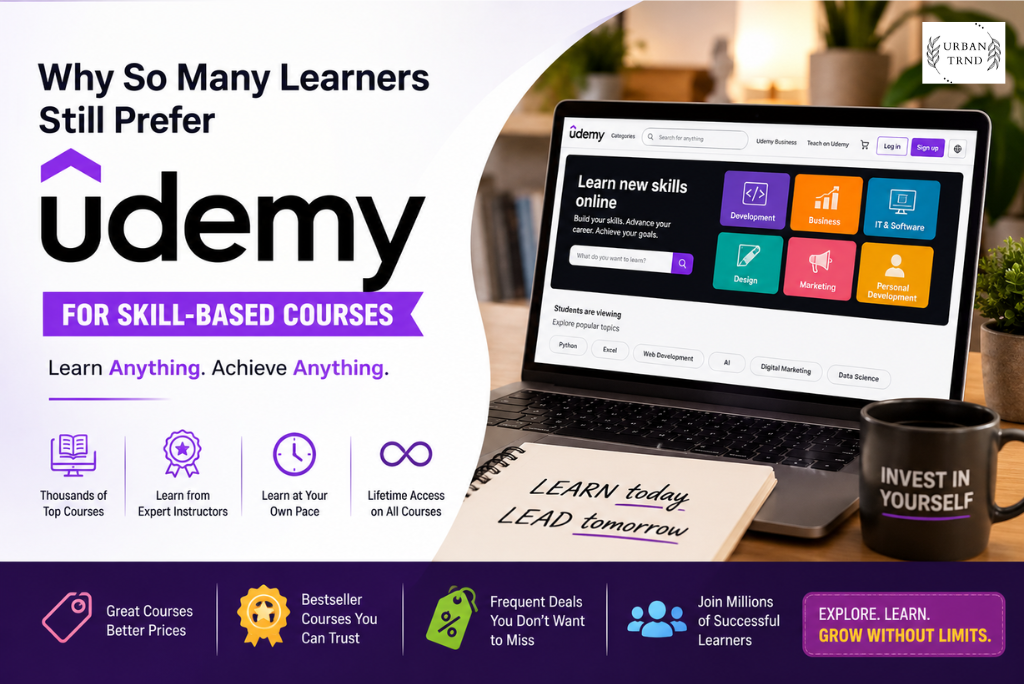
Most people don’t struggle with the idea of learning online anymore. The real problem is figuring out where to learn from without wasting money or ending up with boring content you never finish. That’s exactly where Udemy keeps getting attention.
A lot of learning platforms feel too serious or too academic. You open the website and instantly feel like you signed up for another semester of college. Udemy feels different from that. It’s more casual, more practical, and honestly easier to explore when you just want to learn something useful without overthinking it.
Some people go there to improve work skills. Others are trying to start freelancing, build a side income, learn editing, understand AI tools, or finally learn coding after postponing it for years. The platform works because it doesn’t force everyone into one type of learning experience.
The Variety of Categories Is Probably the Biggest Reason People Stay
The first thing that stands out on Udemy is how much stuff is actually available there. You go in thinking it’s mainly coding courses, then suddenly you realize there are categories for almost everything people are searching for these days.
The technology section is obviously huge. Courses related to Python, web development, cybersecurity, cloud computing, AI tools, machine learning, and app development continue getting massive enrollments. A lot of people want tech skills now, but not everyone wants to spend lakhs on bootcamps or long certifications. Udemy makes those topics feel easier to access.
Then there’s the business section, which honestly has become one of the most useful parts of the platform. You’ll find courses on digital marketing, leadership, finance, communication, entrepreneurship, project management, and sales. What makes these courses interesting is that most of them focus on practical use instead of just theory.
That’s important because people don’t really buy online courses anymore just to “gain knowledge.” They usually want something that can help them get better opportunities, improve work performance, or even start earning through freelance projects or small businesses.
The creative category is another area where Udemy does really well. Courses around Canva, Photoshop, Premiere Pro, video editing, animation, photography, and design are extremely popular now. Content creation has become such a major part of social media and online business that people actively look for these skills instead of treating them like hobbies.
And it’s not all career-focused either. There are categories related to productivity, fitness, music, language learning, self-improvement, and personal development too. That mix makes the platform feel less rigid compared to traditional learning websites.
Some Courses Become Bestsellers Because People Keep Recommending Them


One thing that helps a lot while browsing Udemy is seeing how many people have already taken a course. When a course has thousands of reviews and huge enrollment numbers, it naturally feels more trustworthy.
Python courses are still among the biggest bestsellers on the platform. Same with web development. A lot of beginners start there because those skills continue opening doors in tech and freelancing.
Excel courses are surprisingly popular too. People joke about Excel sometimes, but advanced Excel skills are still useful in so many jobs. From dashboards to automation and reporting, these courses continue getting attention because they solve real work problems.
Recently, AI and ChatGPT-related courses have exploded on the platform. Almost everyone wants to understand how AI tools actually work and how they can use them in daily work. Some learners are using these courses for productivity, some for marketing, some for business, and others simply because they don’t want to feel left behind.
Digital marketing courses are another major reason people keep buying from Udemy. SEO, Meta Ads, Google Ads, affiliate marketing, email marketing, and content creation courses usually stay in demand because people see them as practical income-related skills.
Honestly, that’s the pattern you notice across the platform. The courses that perform best are usually the ones connected to real-life use, not just theory.
The Deals Make Buying Courses Feel Much Easier
If there’s one thing almost everyone knows about Udemy, it’s the discounts.
A course might show a high original price one day and then suddenly become available at a much lower price during a sale. And those sales happen pretty often. For buyers, that changes the mindset completely because it feels less risky to try learning something new.
A lot of people hesitate before purchasing online courses because subscriptions and premium programs can become expensive really fast. Udemy feels easier to justify because you can simply buy the course you need instead of committing to another monthly payment.
The lifetime access part also helps. Most learners don’t finish courses in two days. People get busy, take breaks, come back later, revisit lessons, or skip around depending on what they need. Knowing the course stays in your account removes that pressure of “finish it before your access ends.”
That flexibility matters more than people think.
It Feels More Beginner-Friendly Than Many Other Platforms
Some learning websites accidentally make beginners feel dumb. The instructors start using technical terms too quickly, lessons move too fast, and people lose confidence after the first few videos.
Udemy usually feels more approachable than that. A lot of instructors teach assuming the learner is starting from zero. That makes a huge difference for people changing careers or learning something completely unfamiliar.
You can literally go from knowing nothing about video editing, coding, investing, or marketing to understanding the basics properly just by following a structured course.
And honestly, structured learning is underrated now.
People spend hours jumping between random YouTube tutorials, blog posts, and short clips trying to piece everything together. Sometimes that works, but most of the time it becomes confusing because every creator explains things differently.
Udemy courses usually feel more organized. You know where to start, what comes next, and what the final outcome is supposed to be. That alone saves a lot of frustration.
It’s Not Just About Jobs Anymore


What’s interesting now is that many learners are not only joining Udemy for career growth.
Some people buy courses because they genuinely want to improve hobbies or personal interests. Photography, drawing, music production, baking, yoga, language learning, productivity systems — these categories have huge audiences too.
That balance makes the platform feel more realistic for modern users. Not every learner is trying to become a software engineer overnight. Sometimes people just want to learn something useful or creative in their free time without joining expensive offline classes.
And because courses are available in so many formats and teaching styles, people can usually find instructors they actually enjoy learning from.
The Platform Keeps Up With What People Actually Want to Learn
One reason Udemy still feels relevant is because the platform adapts quickly to trends.
When AI tools started becoming mainstream, the platform quickly filled up with courses around ChatGPT, automation, prompt writing, AI productivity, and business use cases. The same thing happens with social media trends, creator tools, coding frameworks, and business software.
That’s important because online learning becomes useless very quickly if the content feels outdated. People want skills connected to what’s happening right now, not lessons that already feel old.
Udemy does a good job of keeping the course library aligned with what learners are actively searching for.
Why So Many People Still End Up Choosing Udemy
At the end of the day, Udemy works because it makes learning feel practical instead of overwhelming.
You can explore trending skills, creative tools, business topics, tech courses, and productivity lessons all in one place. The bestseller system helps people find trusted courses faster, the discounts make buying easier, and the flexibility makes learning feel less stressful.
For someone trying to improve career skills, start freelancing, learn AI tools, or even just explore a new interest, the platform genuinely feels worth checking out.
And honestly, that’s probably the biggest reason people keep returning to it. It doesn’t feel like a complicated educational system. It feels like a place where you can actually learn things you’ll end up using in real life.